
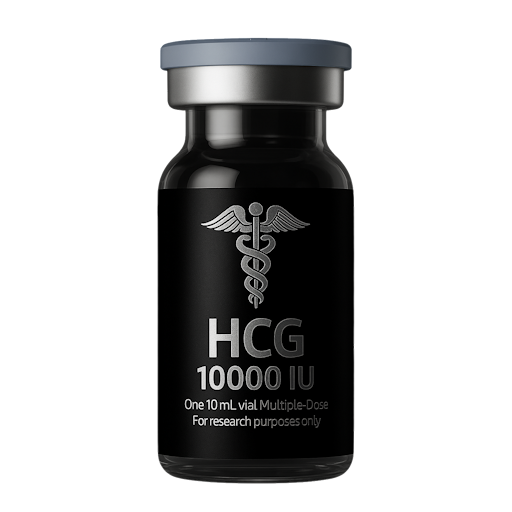
Human Chorionic Gonadotropin (HCG) is a heterodimeric glycoprotein hormone composed of a common α-subunit and an HCG-specific β-subunit. In research settings, HCG is used to interrogate luteinizing hormone/ chorionic gonadotropin receptor (LHCGR) signaling, gonadal steroidogenesis, and hypothalamic–pituitary–gonadal (HPG) axis dynamics in cell, tissue, and translational models.
Target: LHCGR (GPCR) expressed on gonadal cells (e.g., Leydig/theca) and select extragonadal tissues.
Mode: LHCGR agonism → Gs/adenylyl cyclase → ↑ cAMP/PKA signaling → transcriptional activation of
steroidogenic enzymes (STAR, CYP11A1, HSD3B, CYP17A1, CYP19A1) and cholesterol transport.
Functional Readouts: Progesterone/testosterone/estrogen output; STAR phosphorylation; cAMP pulse kinetics;
receptor internalization/recycling; cross-talk with ERK/AKT pathways in granulosa/Leydig models.
HPG-axis modeling and feedback studies • Steroidogenesis and enzyme induction assays • Folliculogenesis and luteal-function models • Receptor pharmacology (affinity/efficacy vs. LH) • Signal transduction mapping (cAMP/PKA, CREB) • Comparative glycoprotein-hormone biology (FSH/LH/TSH family).
Revitalized Health proteins are prepared under cGMP-aligned conditions with pharmaceutical-grade inputs. Each HCG lot is characterized by chromatographic profiling (HPLC), identity confirmation by peptide-mapping LC-MS/MS, and potency assignment in International Units (IU) using validated bioassay/ELISA methods where applicable. Microbial and endotoxin limits are qualified to research-grade specifications. Lot-specific Certificates of Analysis document identity, purity, potency, and test parameters.
Store lyophilized HCG at 2–8 °C, protected from light and moisture. Reconstitute gently with suitable diluent; swirl—do not vortex. After reconstitution, maintain at 2–8 °C and utilize within 20 days. Avoid repeated freeze–thaw cycles and minimize surface adsorption by using low-binding plastics/glassware. Record lot, concentration, and in-use dates for traceability.
For laboratory research use only. Not intended for human consumption, therapeutic, or diagnostic application. Supplied exclusively to qualified professionals conducting controlled scientific investigations.
Prepared for research applications. Identity, purity, potency, and lot analytics available per batch. Not medical advice.
Target: Luteinizing hormone/choriogonadotropin receptor (LHCGR) on gonadal cells.
Mode: Glycoprotein hormone mimicking LH → Gs activation → ↑ cAMP/PKA → ↑ cholesterol side-chain transport (StAR) & steroidogenic enzyme activity → ↑ testosterone (Leydig) in males; induces final follicular maturation/ovulation & supports corpus luteum progesterone/estradiol in females.
Analytics: Identity/purity by HPLC, SDS-PAGE; potency via cell-based cAMP or in-vivo bioassay; immunoassay for serum hCG; endocrine pharmacodynamics (serum T/E2/Prog), semen parameters (males), ultrasound follicular response (females). Safety monitoring includes estradiol, progesterone, hematologic/edema assessment.
For site education and research communication only. Not medical advice; not a treatment guide.