
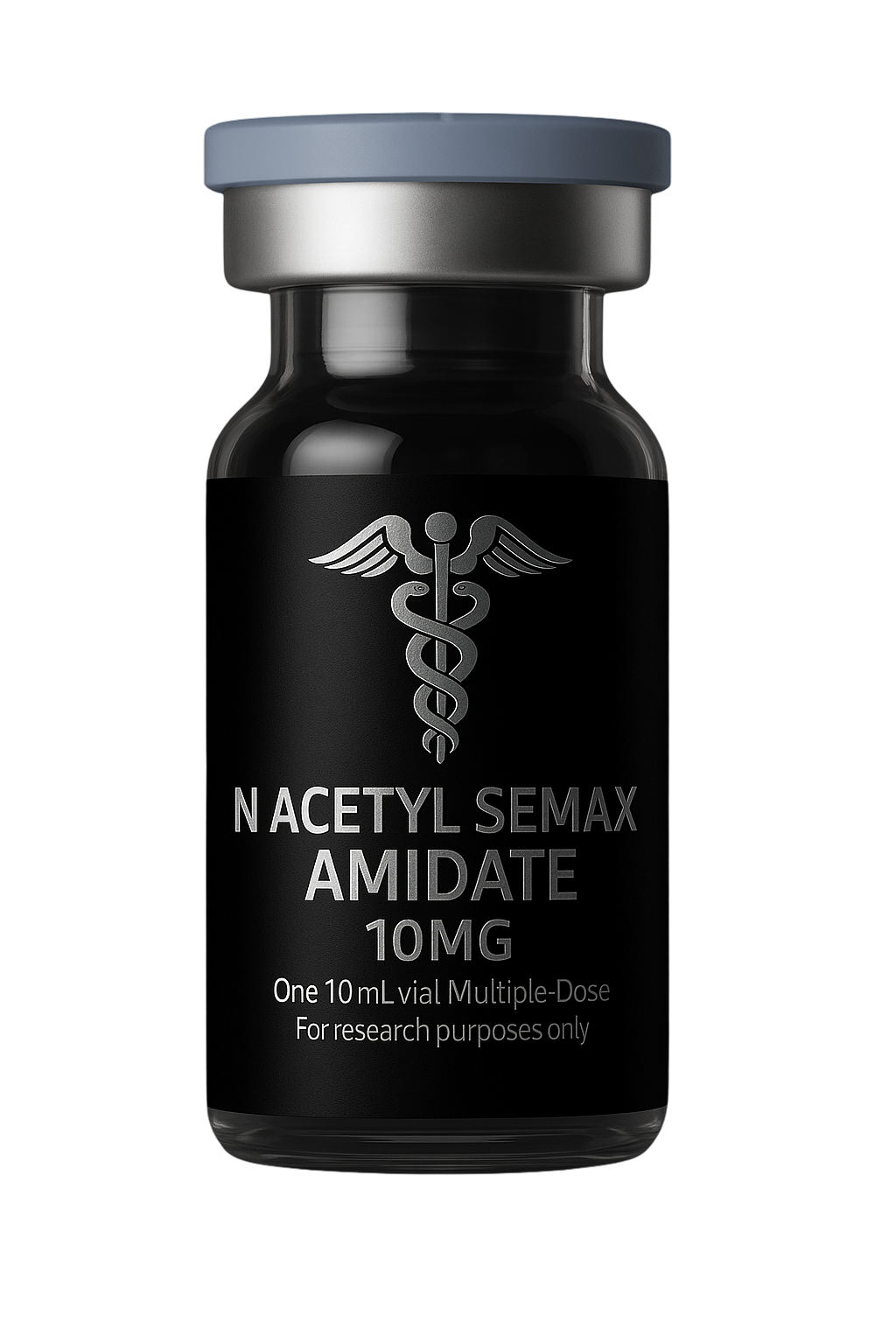
N-Acetyl Semax Amidate (NAS-A) is a structurally modified analog of Semax that incorporates N-terminal acetylation and C-terminal amidation to enhance peptide stability and resist exopeptidase degradation in research systems. NAS-A is utilized in experimental neuroscience to interrogate neuromodulation, synaptic plasticity, and stress-response pathways with an emphasis on cortical network function and cognitive process readouts in preclinical models.
Design: N-terminal acetylation and C-terminal amidation aim to improve metabolic stability,
receptor engagement windows, and proteolytic resistance versus the parent sequence.
Neurotrophic Programs: Literature on Semax-class peptides describes upregulation of
neurotrophin-linked gene expression (e.g., BDNF-associated pathways) with downstream MAPK/ERK and
PI3K/Akt cascades that support synaptic protein expression and plasticity indices.
Neurotransmission: Experimental work evaluates modulation of monoaminergic tone and
glutamatergic balance, with effects tracked across cortical excitability and attention metrics.
Functional Notes: NAS-A is explored for its enhanced stability profile to enable extended
observation windows in vitro and in vivo research paradigms.
Synaptic plasticity and LTP assays • Learning/memory and attention paradigms • Cortical network oscillations and sensory processing • Oxidative-stress and neuroinflammation models • Recovery frameworks after experimental insult with proteostasis and mitochondrial readouts.
Revitalized Health peptides are produced under cGMP-aligned conditions using pharmaceutical-grade inputs. Each NAS-A lot is confirmed at ≥99% purity by HPLC with structure/identity verified by LC-MS/MS. Lots undergo appearance and solubility checks, with microbial/endotoxin screening to research-grade specifications. Batch-level Certificates of Analysis document analytical methods and validated results.
Store lyophilized vials at 2–8 °C, protected from light and moisture. Following reconstitution with bacteriostatic water, maintain at 2–8 °C and utilize within 20 days. Avoid repeated freeze–thaw cycles to preserve peptide integrity and target-engagement fidelity.
For laboratory research use only. Not intended for human consumption, therapeutic, or diagnostic application. Supplied exclusively to qualified professionals conducting controlled scientific investigations.
Formulated for research applications. Purity, identity, and lot analytics available per batch. Not medical advice.
Identity: N-Acetyl Semax Amidate (NAS-A), an N-terminally acetylated and C-terminally amidated ACTH(4-10) analog.
Mode: Retains Semax core motifs with modifications that enhance protease resistance and metabolic stability, supporting longer residence time after intranasal delivery. Reported to upregulate neurotrophic programs (BDNF/TrkB), modulate monoamine turnover, and engage anti-oxidative/anti-inflammatory gene signatures in preclinical models—aimed at attention, working memory, and stress resilience profiles.
Analytics: Identity/purity by HPLC and LC-MS; peptide content & counter-ion profile; accelerated/real-time stability and peptidase-resistance assays. PD readouts: cognitive batteries (CPT, Trail Making), EEG spectral metrics, HRV stress markers; serum/plasma BDNF and cytokine panels in exploratory settings. Monitoring: local nasal tolerability, daytime alertness, BP/HR as applicable.
Educational, research-style content for your product page. Not medical advice or a treatment claim.